 nocware
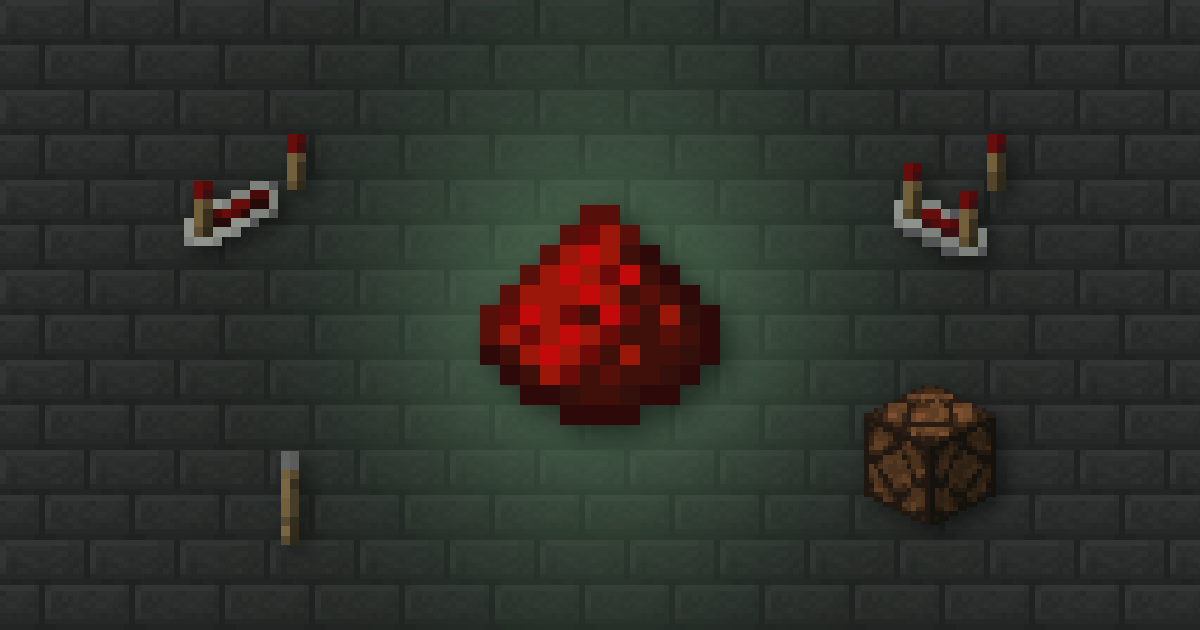
 Quick answer
- A
 Lever, button or redstone torch makes a signal. Redstone dust carries it.
- A signal goes 15 blocks along dust before it dies out.
- A
 Repeater boosts it back to full. A
 Comparator reads containers.
Redstone is Minecraft's electricity. Learn these basics and you can build doors, lamps, farms and traps.
Power sources
- Lever: on or off, stays where you leave it.
- Button: a short pulse.
- Pressure plate: on while something stands on it.
 Redstone torch: always on, unless the block it's on is powered.
 Observer and daylight detector: react to changes and light.
Signal strength
15full signal strength
1lost per block of dust
So a line of dust carries a signal 15 blocks. For longer lines, add a repeater.
Repeaters
A repeater takes any signal and sends out a full strength 15. You can also click it to add a short delay, which is useful for timing.
Comparators
A comparator passes a signal through, and it can also read how full a chest, hopper or other container is. That's how item sorters and "storage full" lights work.
First buildPut a lever, a few dust and a  Redstone lamp in a line. Flip the lever and the lamp lights up.
 Next steps
Add a  Piston or Sticky piston to make things move. Pistons are the start of doors, farms and flying machines.
Redstone tickRedstone timings are measured in redstone ticks, each 0.1 seconds.
 Cheat sheet
- Signal travels 15 blocks on dust
- Repeater resets it to 15
- Comparator reads containers
- 1 redstone tick = 0.1 seconds
 Daily Minecraft TriviaA new Minecraft trivia question every day→
 How Nether Portal Linking Works
 Why Your Anvil Says Too Expensive
 Shulker Box Storage Maths