 nocware
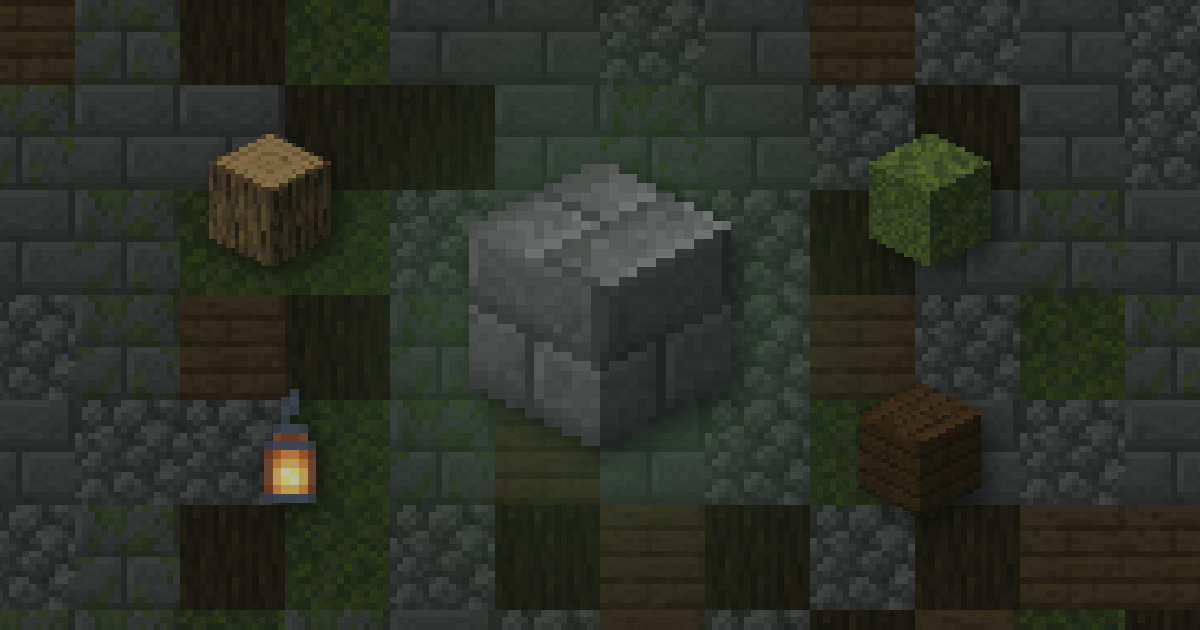
 Quick answer
- A block palette is a small set of blocks (usually 4 to 6) that look good together.
- Pick one main block, one or two for texture, and one accent.
- Blocks that share a colour family blend; one contrasting block makes details pop.
The difference between a builder's build and a dirt hut is mostly the blocks. A good palette makes even a simple shape look planned.
 Block Palette GeneratorGenerate Minecraft block palettes from real block textures→
 The 60-30-10 rule
60%main block (walls, the big surfaces)
30%secondary blocks (frames, roof, texture)
10%accent (trim, details, lights)
It's a rough guide, not a rule you have to measure. It just stops one block taking over or the build looking messy.
 How to pick a palette
- Choose your main block based on the vibe: stone bricks for castles, spruce for cabins, white concrete for modern.
- Add texture with blocks in the same colour family, like mossy or cracked versions, or stone next to andesite.
- Pick one accent that contrasts, like dark oak against light stone, or copper against deepslate.
- Test it on a small wall before building the whole thing.
 Palettes that always work
| Style | Try these blocks |
|---|---|
| Medieval | Stone bricks, cobblestone, spruce logs, dark oak |
| Cottage | Oak planks, stripped oak logs, cobblestone, moss |
| Modern | White concrete, smooth stone, glass, grey concrete |
| Nether |     Blackstone, polished basalt, crimson planks, gilded blackstone |
| Desert | Sandstone, smooth sandstone, terracotta, acacia |
 Gradients
A gradient fades smoothly from one block to another, like dark stone at the bottom of a wall to lighter stone at the top. It makes big flat walls look much more natural.
 Block Gradient GeneratorMake smooth Minecraft block gradients between any two blocks, from 4 to 12 steps→
Too many blocksThe most common mistake is using 10+ different blocks. If it looks noisy, take blocks away, not add more.
Look at it from far awayFly back 30 to 40 blocks. Small texture details disappear, so the overall colours matter most.
 Cheat sheet
- 4 to 6 blocks per build
- 60% main, 30% texture, 10% accent
- Same colour family = blends, contrast = details
- Test on a small wall first
Block Palette GeneratorGenerate Minecraft block palettes from real block textures→
 How Nether Portal Linking Works
 Why Your Anvil Says Too Expensive
 Shulker Box Storage Maths